Ainolabs Ambition – Smart Components Market

Short and long term views on Ainolabs business and technology development towards (semi)Autonomous systems build of parts and components
Ainolabs vision key points are:
- Autonomous systems (robotics, assistants, agents) are built from AI components.
- AI components v.s. fully integrated single models make for faster development
- AI components make for cheaper systems as each component trains only on a specific sub-problem (Systems design 101)
- Ainolabs’s AI Component marketplace makes it profitable to develop and publish components
- Ainolabs’s AI Component marketplace makes it faster and cheaper to develop (semi)Autonomous systems for end customers
- The AI Component marketplace is based on technology patented by the founder of Ainolabs (USPTO Patent pending)
- The AI Component marketplace results in AI technology cost reduction by orders of magnitude
- The AI Component marketplace and the players on it results in a sustainable business and technology ecosystem
This could mean that the advanced humanoid robots could be developed and constructed with and from components best suited for purpose. The general ability to move would be applied to e.g. warehouse purposes, there would be indoor-outdoor navigation, HCI, workplace safety constraints and other separate modules.
See dancing robots example https://www.globaltimes.cn/page/202501/1327673.shtml – movement is not a problem. Corresponding products are emerging such as Agibot: https://www.agibot.com/products in China or Menteebot in Israel https://www.menteebot.com/
Currently all this would need to be taught separately at a substantial complexity and cost increase.
Vision in business terms – where is the Profit?
Modular systems are cheaper to build and operate, especially in the Machine Learning field.
All AI related development points towards more capabilities with exponentially increasing development and operational costs. Data sets required for system improvements just about exceed all data in the Internet, and that is only for language models. Such learning also takes massive computing resources. Developing systems for specific purposes essentially from scratch – full ML cycle included – is massively un-economical.
Ainolabs Ambition leads to essential technology layer and business ecosystem that includes smart components repositories and markets. In that scenario, Ainolabs would operate the marketplace and license the essential platform functionality that makes AI component integration and information exchange possible and efficient. That would be a “pie in the sky” -scenario.
Based on the patent held by Ainolabs founder, the early opportunity is licensing essential technical abilities. These include the methods to record and search AI component abilities in a repository, dynamically updated AI components (continuous learning abilities) and the basic principles for smart autonomous systems to be build of parts that share concepts and knowledge via well-defined mechanisms.
That would be technology licensing, like e.g Qualcomm earlier in the cellular industry.
The actual business and earnings model is open until the Ambition is more mature. At least the Short term business objective needs to be met before speculating about the end game.
Build smart systems with parts
Candidates for Bowling Alley include actual systems such as Build smart Front Loader, Betting machine or something else with industrial clients. The specific opportunity needs to be identified and secured to reach any potential for the long term view.
The short term possibilities include the fundamentals about AI component repositories:
- How to store components and use Knowledge Graphs as keys
- How to search components based on Knowledge Graphs
- How to integrate, activate and use AI components with Knowledge Graphs as information passing mechanism – arguments passed as KGs
- How to run a composite system on economically viable equipment – cost of actual units.
These are set as comparison to current robotics and marginally autonomous systems that can be taught certain movement patterns, visual or audio processing as complete training set. The Components as referred to above are trained only on the specific topic so that the whole system training set remains limited.
Principal client and benefits
Which system, for whom, how would the composite system be better (faster, cheaper, lighter, more adaptable, more energy-efficient etc) than current robotics?
Possible first projects include, but are not limited to:
- Smart front loader as outlined in the patent application. That should include sensory systems (visual, audio), HCI (voice interaction), navigation, motors and actuators, safety and security components.
- Gambling monitor as outlined in the patent application. Gambling monitor should include Circles of Trust in addition to Components related to evaluating actual performance of parties making the predictions.
- Robot Barista (see Ainolabs blog https://ainolabs.wordpress.com/2024/09/09/how-to-build-a-barista-robot-of-parts/ ) and Fast Order cook. That should include HCI module with great customer service skills, robotic arm or similar to brew coffee and a smart financial component to handle payments (PoS component). Notably the PoS can and possibly should be “regular” software interfacing with smart components.
System decomposition
Product developers can design the architecture of their systems based on subsystems, components, interfaces, interactions and data flows – just like current practice with non-AI development. See Technical description on how at https://ainolabs.wordpress.com/aino-tech/
AUtonomous systems should and could be built of parts. That generates scale and specialization – cheaper, better, higher-quality parts, and cheaper, better and higher-quality systems.
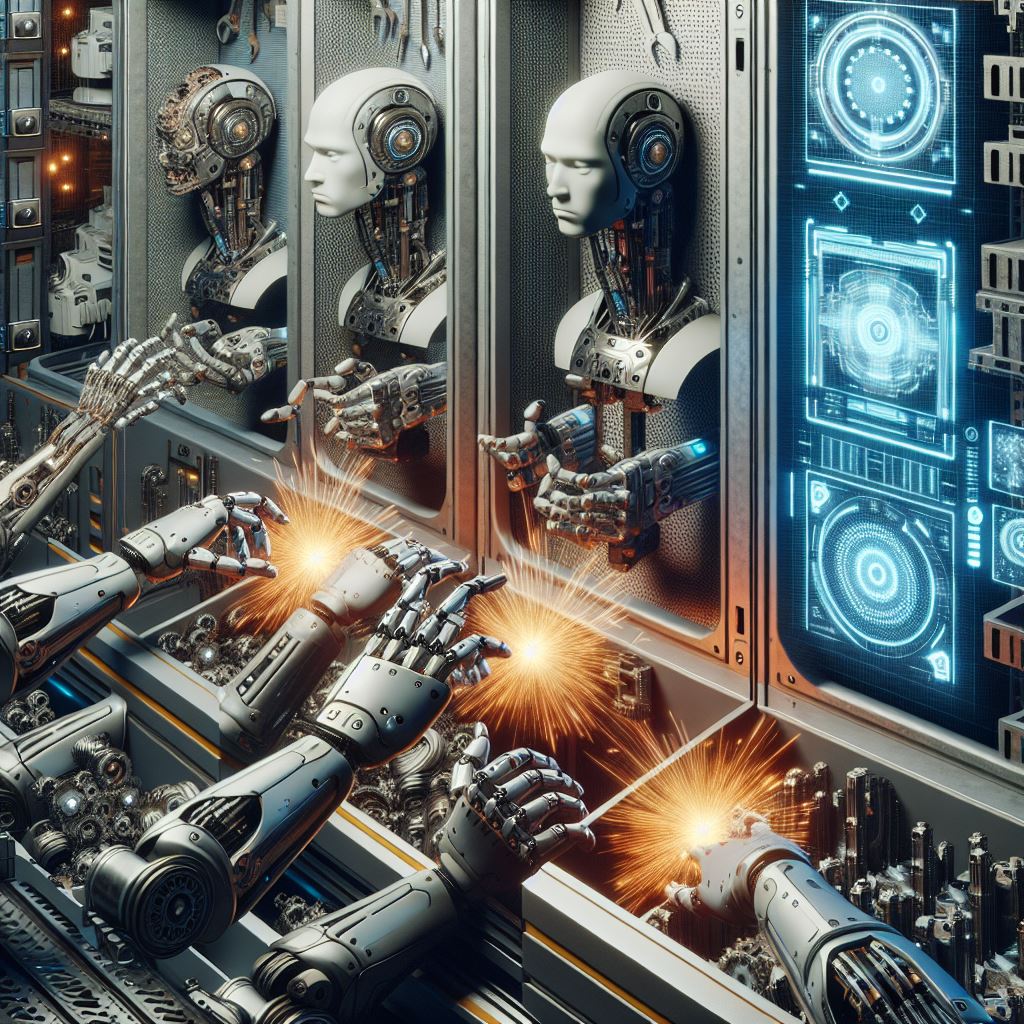
The illustration is obviously and intentionally generated by Copilot.
Partners and their interests
General AI development is costly. If the problem domain can be reduced, the cost is reduced by order of magnitude with the training set size. Components can be integrated into systems, and component developers can enter the market at reasonable cost levels. This generates a business ecosystem of component developers, system integrators, product manufactures and end customers for the systems and products.
For the end customer a competitive market reduces product lifetime costs, and increases the speed of innovation.
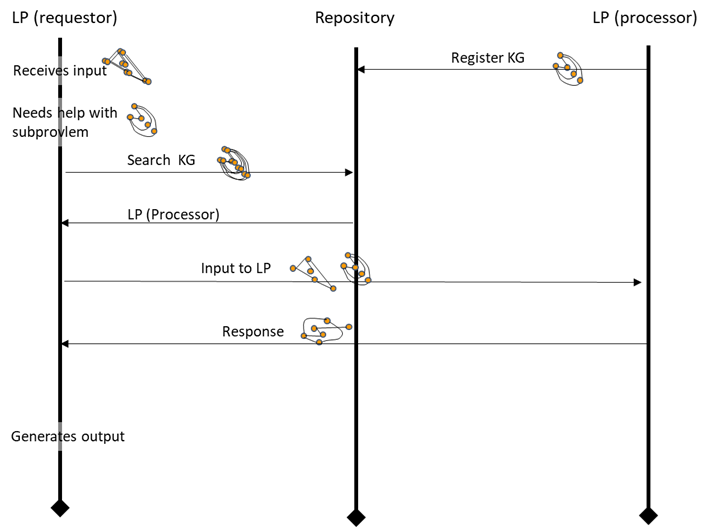
Ainolabs AI repository model
Ainolabs builds the basics, the platform and the AI component repository as outlined in the patent application.
The repository profits the Component developers by:
- Making AI components easy to find.
- Helping with integration of AI components to full systems.
- Providing mechanisms for information exchange between system parts (components) – similar to a REST API call.
- Addressing ownership of AI system learning, both from source material and increased capabilities perspective.
- Providing a contractual framework to buy / lease / use components and for the Component developers to earn on their IPR
- Simple and effective usage and billing (invoicing) framework
These attributes help component providers and system / product developers to build smart and continuously evolving and learning components for their end customers.
By providing that Ainolabs expects to be a valued and valuable player in the future Smart Systems market.
Autonomous system customers
The essential part of the Ainolabs value chain as visioned here is the end customer buying bespoke systems or autonomous products. These customers do not care about smart repositories or Ainolabs technology as such, but the outcome of the ambition outlined here results in products that meet specific needs at reasonable purchase, operational and maintenance costs. The end customers, e.g. industrial clients using Smart front loaders experience operational efficiency improvements large enough to change their competitive position in their respective industries.
AI Component providers
Component developers get a marketplace to sell the parts and components. A part may include mechanics, sensors, actuators and other physical aspects. A component is pure digital entity in the repository, but may be associated with physical products and parts.
The marketplace supports component & part discovery, pricing, revenue recognition, settlement, and usage metering so that component developers, system integrators, end customers and other stakeholders can bring the speciality to market in mutually beneficial terms.
The platform supports information exchange between AI components, and continuous learning inputs for components in active systems. This information exchange is supported by Aino technology and provides a technical and contractual framework for the market participants.
Component providers, system integrators and end customers can follow the usage of various parts and the information exchange between the parts of an autonomous system. This allows the stakeholders to assess value change and accrual of knowledge, and share the revenue based on that. Ainolabs provides a Compensation Framework and a compatible Contractual Framework to help market players to act according to their best interest.
An important aspect of sharing the revenues is Component learning. A component may learn substantial and general added value as part of a specific Autonomous system. The interest of component providers, system and product integrators and end customers may be at odds. In order to reduce market friction, Ainolabs’s Contractual and Compensation Frameworks address these issues head-on and provide models for various situations about the ownership of Component’s increased abilities and the fair compensation about the training material used.
3rd parties, including regulatory
Ainolabs platform is based on transparent Knowledge Graph based representation of the components and parts offered there. These representations can be used by third parties including regulators for market transparency.
Technical aspects
Are outlined in the patent text and background material (lab notes). – See https://ainolabs.wordpress.com/aino-tech/ for technology.
Steps towards the visions – Call to action
Key steps identified, not in any particular order as of now
- Find interested parties (partners). Technology needs to be developed from general design to commercially viable software and other systems.
Commercially viable includes Contractual frameworks and Compensation frameworks, preferably defined and owned by Ainolabs or close affiliates. - Find prospective customers. The first Smart Autonomous products need to be sold for a valuable business purpose. That requires addressing specific customer needs.
- Make offers and proposals until one is realized – first sale of an Autonomous System. First sale is a milestone for all parties.
- Develop MVP of Ainolabs repository, component injection, search and activation.
- MVP of Ainolabs contractual framework
- MVP of Ainolabs lifecycle framework
- MVP of Ainolabs compensation framework
- Design First Autonomous System (FAS) with select partners
- Build and release FAS as a collection of components in Ainolabs repo
- General Availability of Ainolabs frameworks and repositories
- Marketing and expansion plan à Find talent, handover founder to scalable business
Ainolabs background – who, what, why?
The founder has a long, if spotty background in AI technologies since 1990’s. Back then there wasn’t enough computing power, and AI was commercially a small niche for a long time.
Observations from IT and technology industry led to the realization that a lot of “skilled” work – e.g project or R&D management – is routine, very repeatable and as such potential for automation. This assumption led eventually into market and feasibility studies to check if there would be a product – market need match and opportunity within reach. In theory yes, in practice – see below how the discovery proceeded.
Mentor Bot released Aug 6, 2021 – https://ainolabs.wordpress.com/2021/08/06/mentor-bot-premiere-august-6-2021/ as a pre-release to gauge market interest. The results indicated that the idea was not commercially viable at the time. A bot to help and to mentor is expensive to develop, as has then been demonstrated by e.g. OpenAI, and the value generated by it as a standalone product is questionable. Microsoft has later demonstrated by their CoPilot series how to monetize the technology as an add-on feature to existing customer base.
Mentor Bot was rooted in observations about the mind-numbing degree of so-called professional work. The founder has provided R&D and technology consulting services and realized how routine most of that is. Inspired by that and at the time unrealistic ML capabilities, the idea of “fully automated IT Project Manager” was introduced.
This train of thought was still based on the concept of training everything to a single Machine Learning entity. Only when calculating what that would mean in practice – weeks and months of interactive and synchronized audio and video, interpersonal skills, decades of industry experience – and translating that into machine learning cycles and computing resources did it become clear that the “fully automated replica” is not commercially viable.
The next and relevant step was to ask, “would it be possible to build AI systems from components, and by doing that isolate and reduce the complexity and cost of the parts and the whole by orders of magnitude”. That question led into the current patent application and into this Ainolabs Ambition.
The patent is co-authored with Antti Kokkinen and Harri T Okkonen, who helped and contributed to turning the initial raw idea into a patentable innovation.
The Patent itself is pending, submitted to USPTO on Dec 17, 2024.
Interested? Contact Ainolabs.
info@ainolabs.com, aarne@culho.fi +358 40 844 3355 / Aarne
 Modular AI systems